
We’ve all seen it—the dark shadow on the garage floor or that ugly orange streak running down a retaining wall. In the grand scheme of home maintenance, a concrete stain feels like a “low priority” item. It’s cosmetic, right? Wrong.
If you’re looking at your driveway and seeing only a color problem, you’re missing the chemical war happening just below the surface. Concrete isn’t the solid, impenetrable block it appears to be. It is a breathing, porous substrate, and when you ignore a stain, you aren’t just letting your curb appeal slip—you are actively allowing the structural integrity of your property to erode.
In a climate like Maryland’s, where we deal with everything from coastal humidity to biting winter frosts, “waiting until next year” to clean your concrete is often the most expensive decision a homeowner can make.
The Anatomy of an Invasion: Understanding Porosity
To understand why a stain is dangerous, you have to understand what concrete actually is. When concrete cures, the water in the mix evaporates, leaving behind a massive network of microscopic “straws” or air pockets known as capillaries.
Think of your driveway as a giant, hard sponge. It “wants” to absorb liquid. When motor oil, fertilizer, or rust-heavy water sits on the surface, a physical phenomenon called capillary action takes over. This force pulls the contaminants deep into the slab, far beyond where a garden hose or a scrub brush can reach.
Phase 1: The Chemical Breakdown
When petroleum-based products like motor oil or brake fluid are pulled into these capillaries, they don’t just sit there. They begin to react with the cement paste—the “glue” that holds the sand and stone aggregate together.
Over time, these oils soften the concrete. You’ll notice this first as “dusting” or a fine powdering of the surface. Eventually, this leads to pitting. Once the top layer (the “cream” of the concrete) is compromised, the aggregate underneath is exposed to the elements, and the rate of structural decay triples. You’re no longer looking at a stain; you’re looking at a slab that is literally unravelling from the inside out.
Phase 2: The Rust Expansion
Rust stains are perhaps the most deceptive. Often caused by metal patio furniture or high-iron irrigation water, these orange streaks are actually iron oxide. As rust moves through the concrete’s pores, it undergoes a chemical expansion.
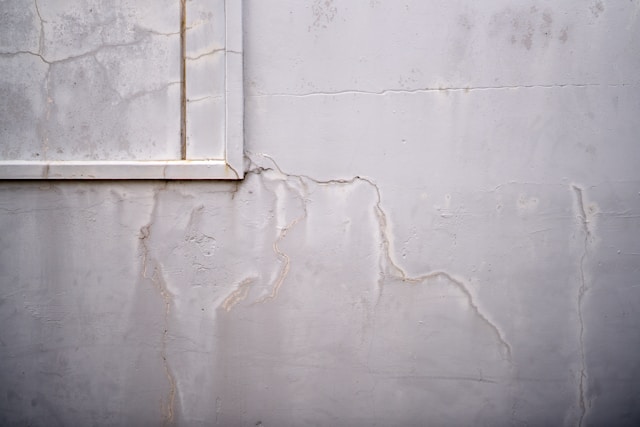
If that rust reaches the internal steel reinforcement (rebar) or wire mesh used to give the slab its strength, it triggers a process often called “concrete cancer.” The metal expands as it oxidizes, creating massive internal pressure that the concrete cannot withstand. The result? Huge, deep cracks and heaving that no surface-level patch can ever truly fix.
Phase 3: Organic Growth and the Biofilm Threat
In the humid air of Owings Mills, organic growth like mold, mildew, and algae is a constant battle. These aren’t just “dirty” spots; they are living organisms. They create a biofilm—a slimy, protective layer that traps moisture against the concrete.
Concrete needs to be able to dry out. When a biofilm holds water against the surface for weeks at a time, it creates a “softening” effect. More importantly, this constant dampness invites more aggressive organisms, like lichen, whose tiny “roots” (rhizines) can actually drill into the pores of the concrete, physically prying the surface apart.
The Mid-Atlantic Killer: The Freeze-Thaw Cycle
This is where the “ignored” stain becomes a catastrophe. In Maryland, we experience dozens of freeze-thaw cycles every winter.
When your concrete is saturated with moisture—whether because of organic biofilms or because the pores have been widened by chemical erosion—that water has nowhere to go. When water freezes, it expands by approximately 9%. If the pores are full, that expansion creates “hydraulic pressure.”
The result is spalling, where the top inch of your concrete simply flakes or chips away. You’ve likely seen driveways that look “shredded” or have large patches of exposed rock; that is the direct result of moisture retention that could have been prevented by professional cleaning and sealing.
Why “DIY” Isn’t the Answer
I see it all the time: a homeowner buys a cheap pressure washer from a big-box store and spends a Saturday trying to “blast” the stains away. Usually, they end up doing one of two things:
- Etching: They use too much pressure too close to the surface, permanently “scarring” the concrete and opening the pores even wider for future stains.
- Driving the Stain Deeper: Without the right chemicals (surfactants) and heat, cold-water pressure often just pushes the oil deeper into the capillaries.
A professional power washing company in Owings Mills like Mr. Clean Power Washing LLC uses a scientific approach. We use heated water to lower the viscosity of oils and professional-grade detergents that break the chemical bond between the stain and the concrete. We lift the contaminant out rather than pushing it in.
The Structural ROI of Professional Cleaning
Think of professional power washing as an insurance policy for your hardscape.
- Prevents Permanent Bonding: Removing tannins (from leaves) and rust before they undergo a molecular bond with the concrete.
- Restores Traction: Removing the slick algae and oil films that make your property a slip-and-fall liability.
- Extends Lifespan: By keeping the capillaries clear and the surface sealed, you can easily double the life of a concrete driveway.
In 2026, the cost of ripping out and re-pouring a standard driveway can easily exceed $15,000. On the flip side, a maintenance schedule with a professional power washing company in Owings Mills is a fraction of that cost.
Conclusion: Don’t Wait for the Crack
If you can see a stain, the damage has already started. The longer you wait, the deeper those contaminants migrate, and the more likely you are to face a total structural failure. Concrete is incredibly durable, but it isn’t invincible.
By treating your exterior surfaces with the same respect you give your home’s roof or HVAC system, you’re protecting your biggest investment. Keep the pores clear, keep the moisture out, and let the pros handle the deep-tissue cleaning that your property deserves.