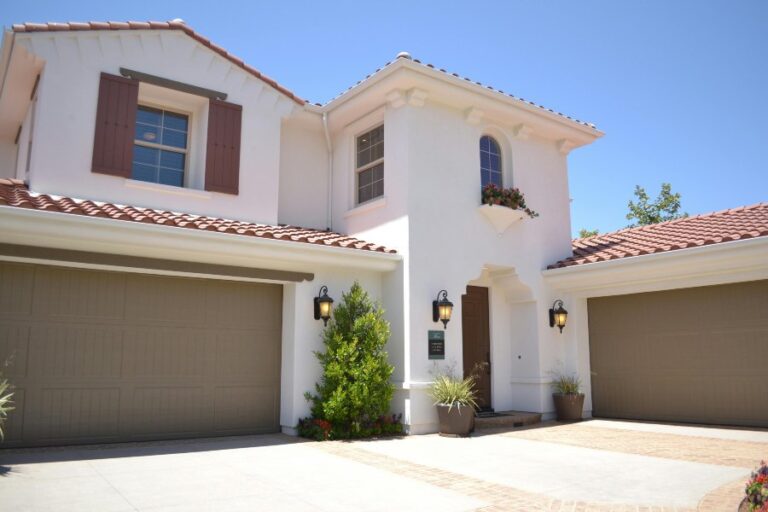

We’ve all had that experience—driving through a neighborhood in York, Pennsylvania, and suddenly hitting the brakes because a specific house just looks different. It’s not necessarily the biggest house on the block, nor is it the one with the most expensive siding. It’s the one that has mastered the art of visual gravity.
In the world of landscape design, we call this “Curb Appeal,” but that’s a bit of a lazy term. What we’re really talking about is a combination of depth, contrast, and intentional focal points that command the eye from fifty feet away. If your front yard feels “flat” or uninspired, it’s usually because it lacks a clear hierarchy of information. Here is how you build a front yard that doesn’t just sit there—it performs.
1. The Power of “Visual Anchors”
The biggest mistake homeowners make is “line thinking”—planting everything in a straight row along the foundation of the house. From the street, this looks like a thin green ribbon that does nothing to break up the massive vertical wall of the home.
To stand out, you need an anchor. This is typically a “specimen” tree or a large architectural element placed in the midground of the yard. By pulling a large element away from the house, you create depth. A mature Japanese Maple or a multi-stemmed River Birch creates a silhouette that catches the light differently than the flat surface of the house. It creates a “layer” that the eye has to travel through, making the yard feel larger and more complex.
2. Elevation and the “Pedestal” Effect
If your yard is perfectly flat, it can often feel clinical or dull. Properties that stand out almost always utilize elevation changes to create interest. This doesn’t mean you need to haul in tons of dirt to build a mountain. Even a 6-inch stone-retaining wall or a raised planter bed creates a “pedestal” effect for your plants.
When you raise a flower bed, you aren’t just helping with drainage; you’re changing the viewer’s perspective. It brings the colors closer to eye level from the road and creates a shadow line along the base of the wall. That shadow is key—it provides the contrast needed to make the green of the lawn pop.
3. The “Pathway” as a Narrative
A front yard should tell a story of where to go. A narrow, cracked concrete path tucked away to the side feels like an afterthought. A wide, sweeping walkway made of pavers or flagstone feels like an invitation.
The most memorable yards use pathways to define the “flow” of the landscape. By widening the path as it approaches the porch, you create a sense of arrival. If you use a material that contrasts with the colors of the house—like a deep charcoal paver against a light brick home—the path becomes a leading line that directs the viewer’s eye straight to the front door, which is the ultimate focal point of any property.
4. Architectural Lighting: The Second Act
A yard that looks great at 2:00 PM but disappears at 8:00 PM is only doing half its job. Lighting is the most underutilized tool in the homeowner’s arsenal. To stand out from the street, you need a mix of three types of light:
- Uplighting: Placing fixtures at the base of your anchor trees to highlight the bark texture and branch structure.
- Path Lighting: Low-profile fixtures that provide a rhythmic “cadence” along your walkway.
- Grazing: Placing lights close to a stone or brick wall to highlight the shadows and textures of the masonry.
5. The Seasonal Transition: Accenting the Best Features
One of the most effective ways to maintain that “stand out” factor year-round is through seasonal highlights. This is where many York homeowners take their curb appeal to the next level.
During the winter months, when the perennials have retreated and the deciduous trees are bare, the structural elements of your yard become even more prominent. This is why outdoor Christmas lighting installation in York has become such a staple of local home design. Instead of just “hanging lights,” a professional installation by a team like PA Christmas Lights focuses on accenting the very focal points we’ve discussed:
- Wrapping the Anchors: Illuminating the trunk and main branches of your specimen trees to maintain that “midground” depth even in the dark.
- Outlining the Silhouette: Using professional-grade C9 bulbs to trace the roofline, highlighting the peaks and gables that give the home its character.
- Path Definition: Using ground stakes to continue the “narrative” of your walkway, ensuring the property feels welcoming even in the dead of winter.
6. Porch Structures and Vertical Interest
The porch is the “handshake” of the home. From the road, a porch with substantial pillars or a well-defined overhang looks more expensive and “grounded” than one with thin, spindly supports.
If your porch is small, you can create the illusion of granduer by using “vertical gardening.” Climbing roses, clematis, or even high-quality hanging baskets add a layer of organic texture to the hard lines of the architecture. This softens the transition between the yard and the house, making the entire property feel like one cohesive unit rather than a building dropped onto a plot of grass.
7. The Rule of Three: Color and Texture
Finally, standing out requires a disciplined color palette. A yard with 50 different types of flowers often looks like “visual noise” from the street. The most sophisticated yards follow the “Rule of Three”:
- A Primary Color: Usually green (the lawn and evergreen shrubs).
- A Secondary Color: A consistent flowering color (like purple salvia or white hydrangeas).
- An Accent Color: Typically found in the front door or a specific set of planters.
By repeating these colors throughout the yard, you create a sense of rhythm. The human brain loves patterns, and a rhythmic landscape feels more “expensive” and intentional to those passing by.
Conclusion: Making it Last
Creating a yard that stands out isn’t about one single expensive feature; it’s about how all the layers work together. From the structural height of your trees to the way you manage your light during the holidays, every choice should serve to draw the eye in and hold it there.
In York, where we take pride in our historic and suburban aesthetic, your front yard is your contribution to the beauty of the community. By focusing on depth, elevation, and professional-grade accents, you aren’t just “mowing the lawn”—you’re curate a masterpiece that people will remember long after they’ve driven past.