
On active construction sites, debris can pile up quickly as crews remove old roofing, demolish walls, cut through concrete, or strip facades. Without a planned way to move that waste from upper levels to the ground, workers end up carrying loads by hand, improvising slides, or tossing materials over the edge. All of those methods are slow, risky, and hard to control.
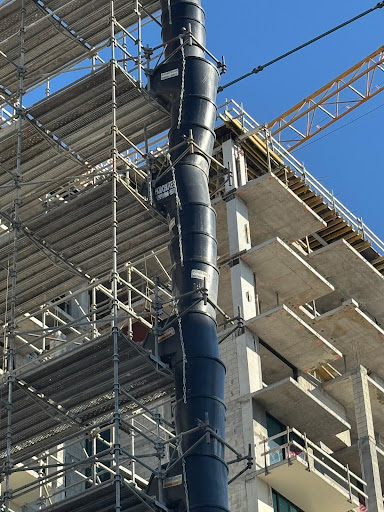
To solve this, many contractors now include construction chutes in their initial logistics plan. A column of debris chutes mounted to the building or scaffolding directs waste straight into dumpsters or dumpster bags at grade.
This keeps stair towers, elevators, and hoists free for people and materials instead of trash, and it reduces the chance of falling objects in busy work zones, directly supporting OSHA standards and best practices for overhead hazard protection.
How debris chutes improve safety and workflow
A temporary chute system is an enclosed vertical or slightly angled tube that guides debris from the work area down to a container. Because the path is enclosed, material cannot bounce out or drift in the wind the way it might if dropped openly. This protects workers on lower levels, ground personnel, and pedestrians near the site.
To manage debris more safely and efficiently, many contractors rely on modular chute systems from manufacturers like HodChutes, which are designed for controlled waste removal on active job sites.
From an efficiency perspective, construction debris chutes allow crews to load small amounts of material continuously rather than organizing labor-intensive hauling runs. Upper-floor teams can keep their work area clear by feeding a trash chute for construction throughout the day. At the bottom, containers or dumpster bags capture the debris in a predictable way, making pickups and waste separation easier to manage.
Main types of construction chutes
Different jobs and debris types call for different chute designs. The three most common categories are plastic chutes, demolition chutes, and roofing debris chutes.
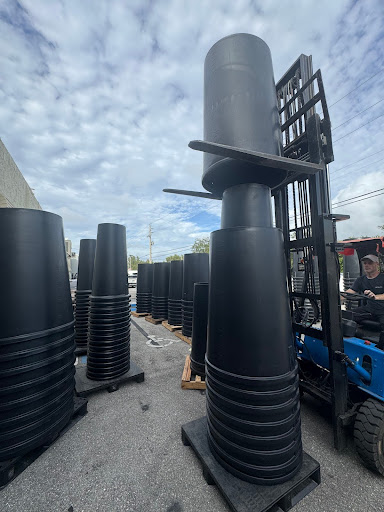
Plastic chutes are typically made from high-density polyethylene (HDPE), which is formulated to resist UV damage and maintain tensile strength even in extreme cold. Conical sections nest inside each other, making them easy to transport and store between jobs. These plastic chutes are popular on renovations and light to medium demolition because they combine durability with relatively low weight. Their smooth interior helps debris slide without frequent blockages, and the material resists weather and corrosion.
For heavier work, reinforced demolition chutes are used. These construction trash chutes may use thicker plastic, steel reinforcement, or hybrid construction that pairs a steel frame with plastic liners. Larger diameters and stronger walls help manage dense, irregular loads such as broken concrete, rebar, and structural steel. Demolition chutes are common on major tear-downs, facade removal, and floor-by-floor gut renovations.
Roofing debris chute setups are adapted for roof tear-offs. Shingles, underlayment, insulation, and fasteners create a high volume of relatively light but sharp waste. Roof-mounted supports or parapet brackets position the chute opening so crews can push or sweep material directly into the trash chute without working too close to the edge. This reduces fall risk and keeps the ground perimeter cleaner and safer.
Key components and layout
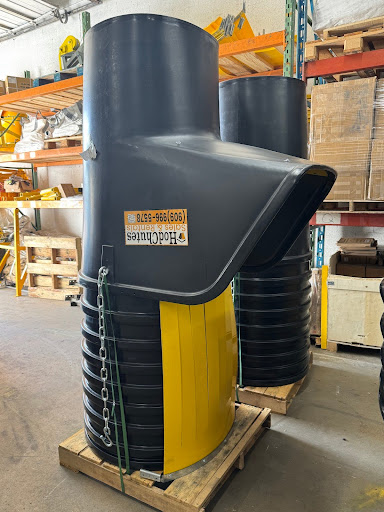
Most construction chutes share several core components. A hopper or intake section at the top provides a flared opening where debris enters the chute. Below that, modular sections connect to form a continuous column, often using chains, hooks, or specialized couplers rated for the weight and dynamic loads. Support frames and anchors attach the column to scaffolding, parapets, balconies, or window openings so the chute cannot swing excessively or pull away from the structure.
At the bottom, the chute discharges into roll-off containers, compactors, or heavy-duty dumpster bags. Some systems add flexible sleeves or skirts to reduce dust and spillage at this point. Planning the layout means aligning chute locations with high-debris areas inside the building while making sure containers can be accessed by trucks without blocking site entrances or emergency routes.
Installation, electric winches, and maintenance
Correct installation is critical to safe operation. Crews usually start by securing the top hopper, then hang the first section and connect additional sections until the chute reaches the desired height. As they build the column, they check alignment and adjust suspension points to keep it as plumb as possible. Once the discharge end is centered over a container, the area around it is barricaded to keep non-authorized personnel away from the drop zone.
On taller projects, handling many chute sections by hand can be difficult. An electric winch mounted to a structural element or scaffold can lift or lower connected sections during installation, adjustment, or removal. This reduces physical strain, improves control, and makes it easier to reposition a chute column as work levels change.
Even robust systems need regular inspection. Daily checks of chains, connectors, hoppers, and high-impact sections help catch cracks, deformation, or missing hardware early. Cleaning chute interiors reduces buildup that might slow debris flow or contribute to jams. For steel components, corrosion control is important on long-duration or coastal jobs. Proper stacking and storage between projects extends the service life of plastic chutes.
Trash chutes, garbage chutes, and construction waste chutes
Terms like trash chute, garbage chute, debris chutes, and construction waste chute are often used interchangeably, but the context differs. In occupied buildings, a trash chute or garbage chute is usually a permanent shaft for daily waste. On job sites, temporary modular systems serve as construction trash chutes, roofing chutes, or demolition chutes, installed only for the project duration.
All of these systems share a basic purpose: to move waste along a controlled path to a collection point, reducing manual handling and uncontrolled drops. On construction and demolition projects, modular plastic systems have become standard because they are reusable, adaptable, and compatible with accessories like liners, dust gaiters, and sleeves. Combined with thoughtful use of dumpster bags and well-planned container logistics, they help keep debris removal as efficient and predictable as any other part of the job.
Environmental and economic benefits
Using debris chutes can also support environmental and cost goals. By directing material into specific containers, crews can separate recyclables such as metal, concrete, and wood from general waste at the base of the chute. This supports diversion targets and can reduce disposal fees. Cleaner, better-sorted loads often have more value in recycling streams.
Economically, chutes reduce labor time spent carrying debris and cleaning scattered material. That allows workers to focus on core construction tasks, shortens cleanup phases, and lowers the chance of damage to stairwells, elevators, and finished surfaces. In documented case studies, contractors have reported up to a 40% reduction in debris removal labor costs compared to manual hauling. Over multiple projects, the productivity gains and reduced risk often outweigh the cost of renting or purchasing chute systems.
As construction schedules tighten and safety expectations rise, debris chute systems have become a core planning element rather than an afterthought.